How Can Hem Beer Equipment Reduce Brewing Challenges?
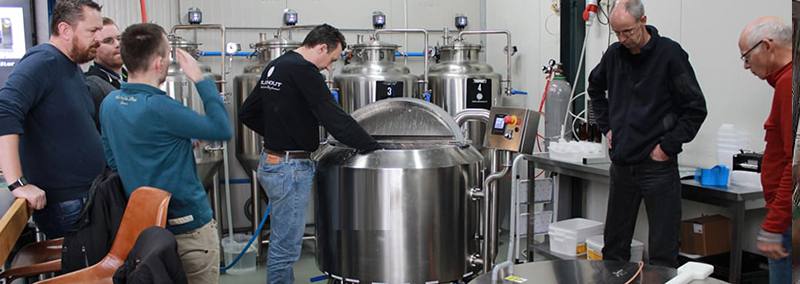
Brewing problems usually come from poor control of temperature, transfer, sanitation, tank scheduling, cooling, and utilities rather than the recipe itself. A well-sized hem brew system can reduce those variables by matching mash vessels, kettles, heat exchangers, fermenters, glycol cooling, pumps, and CIP equipment to one production plan. A 10-barrel brewhouse, for example, produces about 310 gallons per batch, while U.S. craft breweries have historically used roughly 7 barrels of water for each barrel of beer produced. Better vessel geometry, automated temperature control, sanitary piping, and correctly sized cellar capacity can reduce water use, labor hours, cleaning variation, and production delays.
Commercial beer production becomes difficult when one vessel works faster than the next process can accept its output. A 10-barrel brewhouse may complete a brew in roughly 6–8 hours, but fermentation can occupy a tank for 7–21 days depending on yeast, gravity, temperature, and beer style. Four brews per week can therefore require several fermenters before packaging volume becomes stable. Increasing kettle size alone does not solve the scheduling problem; cellar capacity, glycol capacity, hot-water storage, pumps, and cleaning time need to grow with it.
Equipment capacity should be calculated from weekly beer movement, not only from brewhouse nameplate volume. A brewery making 20 barrels per day but holding beer for 14 days may need far more cellar volume than a brewery making the same daily volume with faster tank turnover.
Temperature control affects the process from mash conversion through yeast maturation. Many ale strains operate around 17–23°C, while traditional lager fermentation commonly starts near 10°C. Lallemand technical guidance notes lager pitching rates of roughly 1.0–1.5 million cells per milliliter per degree Plato, with cooler fermentation generally requiring more yeast than ale production. A cooling system that cannot remove fermentation heat quickly enough may allow tank temperature to rise above the brewer's set point.
That requirement makes tank jacket design and glycol sizing part of beer quality control rather than a separate refrigeration issue. A 20-barrel fermenter contains about 620 gallons of beer, so even a small temperature difference affects a large thermal mass. Jacket placement, coolant flow, insulation thickness, ambient room temperature, and the number of tanks cooling at the same time all affect refrigeration demand.
The same measurement discipline applies before fermentation. Mash temperature changes starch conversion and wort fermentability, while lautering performance influences extract recovery and brew length. A brewery regularly achieving 80% brewhouse efficiency will need less malt for the same original gravity than one operating at 70%, provided beer specification remains unchanged. Pumps with suitable flow control and properly sized false-bottom areas help brewers maintain repeatable recirculation and wort collection instead of compensating manually from batch to batch.
| Process area | Useful operating reference | Equipment feature that helps |
|---|---|---|
| Ale fermentation | Often about 17–23°C | Jacketed fermenter and temperature probe |
| Lager pitching | About 1.0–1.5 million cells/mL/°P | Controlled cold wort and cellar cooling |
| WLP001 attenuation | 73–85% | Stable fermentation temperature |
| NovaLager attenuation | 78–84% | Accurate cooling and yeast management |
| Water use | Historical U.S. average near 7 bbl/bbl beer | Metering, CIP control, efficient rinsing |
Yeast figures also show why equipment repeatability matters. Lallemand lists WLP001 California Ale Yeast at 73–85% attenuation and 18–23°C, while LalBrew NovaLager is listed at 78–84% attenuation and 10–20°C. Equipment cannot make two strains behave identically, but it can keep the physical conditions close to the recipe target, giving the brewer a clearer view of changes caused by yeast, malt, oxygen, or wort composition rather than uncontrolled tank temperature.
Once fermentation conditions become stable, sanitation becomes the next source of variation. Wort and beer contact pumps, valves, hoses, sample ports, spray devices, gaskets, and pipe sections all need surfaces that can be cleaned repeatedly. Stainless steel vessels with smooth internal finishes and sanitary fittings reduce places where soil can remain after a wash cycle.
Cleaning performance depends on chemistry, temperature, contact time, mechanical circulation, and soil level. Brewers Association draught-quality guidance, for example, recommends at least 2% caustic for routine beer-line cleaning and 3% for heavily soiled systems. Tank CIP programs are not identical to draught-line procedures, but the reference shows why simply filling equipment with warm water is not an adequate sanitation method. Chemical concentration has to be measured for the application.
CIP equipment is most useful when the brewery can reproduce the same concentration, circulation pattern, contact time, and rinse procedure each cycle. A repeatable 30-minute programmed wash is easier to verify than several operators cleaning the same tank by different methods.
Water consumption shows how sanitation choices affect operating cost. Brewers Association data has placed average U.S. craft brewery use near 7 barrels of water per barrel of packaged beer, while breweries without effective conservation programs can exceed 10 gallons of water per gallon of beer. The association has also reported that about 70% of incoming brewery water may leave as wastewater, depending on plant design and operating practices.
A 1,000-barrel annual brewery using a 7:1 water-to-beer ratio therefore handles roughly 7,000 barrels of water, equal to about 217,000 gallons. Dropping the ratio from 7:1 to 5:1 would reduce annual use by about 62,000 gallons at the same beer output. Metered rinse cycles, efficient spray devices, reuse of suitable final-rinse water, leak control, and correctly sized CIP tanks make that reduction easier to measure.
Water reduction also affects heating and cooling because every unnecessary gallon may need pumping, heating, treatment, or disposal. Brewers Association energy guidance has long noted that smaller breweries often use more electricity per barrel because refrigeration, pumps, compressors, controls, and lighting consume a baseline amount even when production volume is low. Its published industry material uses kWh per barrel as a practical benchmarking measure.
That is why a brewhouse should be evaluated as a group of connected loads. A larger kettle can shorten one stage while increasing steam or electric demand; a faster heat exchanger can shorten wort transfer while increasing cold-water or glycol requirements. Saving 20 minutes at the kettle has limited benefit if the fermenter is not available for another 4 hours.
Hot liquor capacity can create a similar mismatch. A brewery may need hot water for mash-in, sparging, cleaning, and the next brew preparation within the same shift. If the hot liquor tank is undersized, operators wait for reheating between operations. If it is greatly oversized, the brewery heats and stores more water than production requires. Production planning should therefore compare actual gallons required per batch with recovery time and the number of brews planned in 8, 10, or 12 hours.
Pumps and pipe diameter also affect daily output. Too little flow extends transfer time; excessive velocity may create foaming, unnecessary shear, or difficult valve control. Variable-frequency drives allow operators to reduce pump speed during sensitive transfers instead of controlling every condition by partially closing a valve. Ten minutes saved across six transfers removes one hour from a busy production day without changing recipe design.
Automation can reduce repeated manual adjustments, although full automation is not required for every brewery. Temperature controllers, level sensing, pump interlocks, timed steps, and valve status feedback can cover the repetitive parts of production while leaving recipe changes under brewer control. A facility making 3 batches per week may accept more manual work than one producing 3 batches per day.
Cellar planning becomes more important as brew frequency rises. Suppose a brewery produces 10 barrels per batch, brews four times per week, and keeps each beer in fermentation and conditioning for an average of 14 days. About 80 barrels are already moving through the cellar before extra holding time, dry hopping, carbonation, or packaging delays are added. Six 10-barrel fermenters would therefore leave little scheduling room, while eight or more provide more practical flexibility.
Tank size can also change labor requirements. One 20-barrel fermenter filled with two 10-barrel brews uses fewer tank fittings and one cleaning cycle compared with two separate 10-barrel tanks, but it also requires the second wort batch to arrive within an acceptable production window. A brewery making many small brands may prefer more 10-barrel tanks even when larger tanks reduce cleaning frequency.
Fermentation management then connects directly to yeast handling. Lallemand guidance for lager brewing recommends harvesting yeast around 24–48 hours before full attenuation when appropriate and storing harvested slurry around 2–4°C for no longer than roughly 48–72 hours before reuse. The same guidance suggests limiting repitching in that process to around 8–10 generations to reduce performance changes. Equipment with sanitary sample valves, yeast outlets, controlled cooling, and accessible bottom fittings makes those procedures easier to carry out consistently.
Tank geometry affects what the brewer can actually remove. Yeast, hop material, and sediment collect near the bottom of a cylindroconical fermenter, so cone angle, outlet position, valve size, and internal finish affect harvesting and dumping as much as total tank volume.
Maintenance deserves the same numerical planning. If a brewery runs 250 production days per year, a pump seal that begins leaking does not only create a maintenance job; it can interrupt transfers, cleaning, or an entire brew schedule. Accessible pumps, standardized sanitary clamps, replaceable gaskets, labeled valves, and service space around motors shorten routine maintenance and reduce the need to dismantle unrelated pipework.
Spare-part standardization can help further. Using several incompatible valve sizes or gasket types increases inventory and the chance that a needed part is unavailable during production. A brewery with 30 butterfly valves gains practical benefit from using a limited number of common seal sizes, provided pressure, temperature, and chemical compatibility remain suitable.
Expansion planning should start before every fermenter position is filled. A brewery operating six tanks in 2026 may expect to add four more within several years, but the original chiller, glycol reservoir, floor drains, electrical service, and control panel may not have enough spare capacity. Reserving physical connections and utility margin during the first installation can reduce later pipe changes and shutdown time.
For equipment selection, the useful comparison is therefore not “500 L versus 1,000 L” or “manual versus automatic.” Ask how many saleable barrels must leave the brewery each week, how long each beer occupies a tank, what percentage of brews require dry hopping, how many cleaning cycles occur per day, how much water is used per barrel, and how many tanks can demand cooling simultaneously. Those figures produce a specification that matches the brewery rather than a generic equipment list.
A practical equipment review can use a short set of measured targets:
-
Record brewhouse yield for at least 10 consecutive batches instead of judging performance from one brew.
-
Track water use as barrels of water per barrel of packaged beer and compare monthly results with the historical 7:1 U.S. reference.
-
Check fermenter temperature against the set point throughout active fermentation, not only once per shift.
-
Record CIP concentration, temperature, circulation time, and final-rinse result for every cleaning cycle.
-
Compare planned and actual tank occupancy over at least 8–12 weeks before adding brewhouse capacity.
-
Measure electricity or fuel per barrel when possible; a 10% reduction is easier to manage when the brewery knows which process created it.
-
Size new cellar equipment from weekly production, beer residence time, and packaging schedule rather than tank diameter alone.
When those measurements guide vessel size, cooling, cleaning, pumping, controls, and cellar layout, equipment removes avoidable variation from the brewing process and gives the brewer more consistent operating conditions from one batch to the next.