How Comfortable Is the XPENG electric suv G6 for Long-Distance Travel?
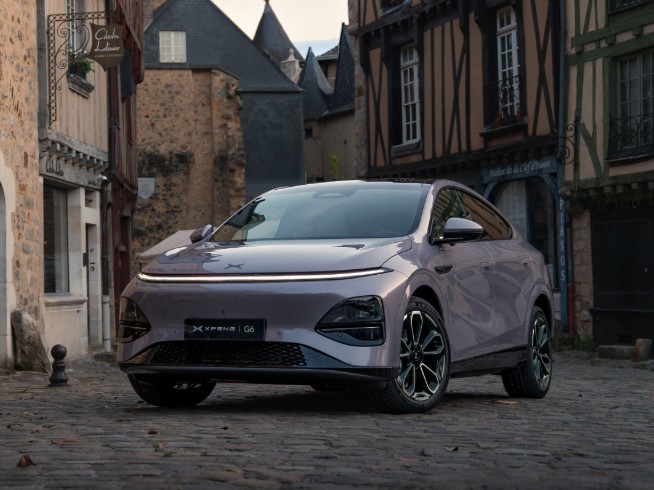
Yes. The G6 is well suited to long-distance travel because its comfort is supported by measurable touring hardware rather than cabin softness alone. The 2026 Australian RWD Long Range combines an 80.8 kWh LFP battery, 525 km WLTP range, 451 kW peak DC charging and a claimed 10–80% charge in 12 minutes. Its 2,890 mm wheelbase gives rear passengers useful legroom, while the 571 L boot handles multi-day luggage. Front seats offer 12-way electric adjustment, heating and ventilation. The main reservation is ride quality: uneven motorway surfaces can expose more body movement than the seat comfort initially suggests.
Long-distance comfort starts with how often the car forces its occupants to stop. The 2026 RWD Long Range is rated at 525 km WLTP on 20-inch wheels, using an 80.8 kWh gross-capacity LFP battery and an official consumption figure of 17.9 kWh/100 km. The Standard Range uses 68.5 kWh, returns 480 km WLTP on 18-inch wheels and is rated at 16.6 kWh/100 km.
WLTP figures are not motorway guarantees. Sustained speed, low temperatures, strong headwinds, cabin heating and a full passenger load can all cut usable range, so a 525 km rating should not be treated as 525 km between real highway stops. XPENG itself states that speed, temperature, load, terrain and air-conditioning use can change actual range.
That range calculation matters less when charging stops are short. The Long Range accepts up to 451 kW DC, with XPENG claiming 10–80% in 12 minutes under suitable conditions; the Standard Range peaks at 382 kW and carries the same 12-minute claim. Both use an 800V high-voltage architecture rather than the 400V systems still found in many EVs.
A 10–80% session adds roughly 70% of usable battery capacity, so charging can fit into a short coffee or restroom stop when a sufficiently powerful charger is available. Peak power should not be expected throughout the whole session: battery temperature, charger capability, starting state of charge and thermal management influence the charging curve.
For touring comfort, 12 minutes at a charger matters differently from 30–40 minutes. A driver travelling 700–900 km in one day spends less time waiting in the vehicle, while passengers can use the charging stop as a normal rest break rather than planning the day around the battery.
Cabin dimensions support the same use case. The G6 measures about 4,753 mm long, 1,920 mm wide and has a 2,890 mm wheelbase, while luggage capacity is 571 L with the rear seats in use and 1,374 L with them folded. Five people therefore do not need to trade all rear-seat space for luggage on a typical weekend journey.
| Touring measure | 2026 RWD Long Range | Why it matters after several hours |
|---|---|---|
| WLTP range | 525 km | Fewer planned charging stops |
| Gross battery | 80.8 kWh LFP | Large energy reserve for motorway use |
| DC peak | 451 kW | Short high-power charging sessions |
| 10–80% charge | 12 min claimed | Less stationary time |
| Wheelbase | 2,890 mm | More rear leg space |
| Boot | 571 L | Better luggage capacity with 5 seats in use |
| Consumption | 17.9 kWh/100 km | Useful reference for route planning |
Seat design becomes more important once the trip passes two or three hours. The current XPENG electric suv offers electrically adjustable Nappa leather seating, while the front seats support 12-way power adjustment, heating and ventilation; massage functionality is also listed for relevant configurations. Small changes in backrest angle, lumbar position or cushion height can reduce the need to hold one posture for an entire motorway section.
Ventilation has practical value in warm climates because the body remains in direct contact with the seat for hours. Instead of lowering the whole cabin temperature aggressively, airflow through the seat can keep the back and upper legs more comfortable. Heating serves the opposite role in cold weather, where warming the occupant locally may allow a less aggressive cabin temperature setting.
The second row benefits more from geometry than electronics. A 2,890 mm wheelbase gives adult passengers room to move their knees and reposition their feet, while the relatively open EV floor avoids the large centre tunnel common in combustion SUVs. On a 2026 family road trip, that matters more after hour three than the impression created during a 15-minute showroom sit.
Cargo capacity also affects passenger comfort indirectly. With 571 L available behind the rear seats, bags can stay in the luggage compartment instead of moving into the passenger area. Folding the second row increases capacity to 1,374 L, useful for longer trips carrying sports gear, larger cases or camping equipment.
The suspension deserves more attention than the seat specification because occupants feel every road input through the body structure. The G6 uses a front double-wishbone independent arrangement and a rear five-link independent suspension, a layout that allows engineers to manage wheel movement separately from much of the steering input. The 2026 configurator also lists Eco, Comfort, Sport and Individual driving modes.
Wheel size changes the experience. The Standard Range can use 18-inch wheels, while 20-inch wheels are fitted to the Long Range in the Australian specification. A smaller wheel normally leaves more tire sidewall to absorb sharp joints and broken surfaces, while the larger wheel can transmit more short-frequency movement into the cabin.
That difference becomes noticeable on concrete motorway seams, patched asphalt and repeated surface imperfections. A car may feel soft at 50 km/h yet become less settled at 100–110 km/h when longer road undulations cause the body to continue moving after the first suspension movement. Buyers who regularly cover several hundred kilometres should therefore include poor highway surfaces in a test drive rather than evaluating comfort only on smooth urban roads.
Noise follows a similar pattern. At low speed, there is no combustion engine operating through several thousand rpm, so acceleration and urban cruising remain calm. At motorway speed, aerodynamic noise and tire contact become a larger share of the sound entering the cabin, particularly because there is no engine noise masking them.
XPENG describes the 2026 G6 as using high-performance NVH engineering intended to reduce road vibration. Its 0.248 drag coefficient also limits aerodynamic resistance, although drag coefficient alone cannot describe perceived wind noise around mirrors, glass and door seals. Frameless doors and the panoramic roof make sealing and acoustic tuning more relevant at motorway speeds.
Climate control adds another layer during a six-hour journey. The current car uses XHP 3.0 thermal management, while the panoramic glass roof increases the amount of glass exposed to solar load. Seat ventilation, automatic climate control and pre-conditioning can therefore influence comfort before the first kilometre is driven, especially after the vehicle has been parked in direct sun.
Long journeys also involve cognitive fatigue, not only physical discomfort. The 2026 G6 lists adaptive cruise control, lane-centering control, adaptive turning cruise and auto lane change on relevant specifications, together with driver-state monitoring. These systems can reduce repetitive accelerator and steering corrections on a long motorway section, but XPENG states that the driver must remain attentive and intervene when conditions require it.
A large central display can help or hurt depending on the task. The current Australian specification combines a 10.25-inch digital instrument cluster with a 15.6-inch central touchscreen, Apple CarPlay, Android Auto, navigation and voice control. Keeping navigation instructions and battery information visible reduces the need to use a phone while travelling.
The powertrain is also easy to live with over distance. The RWD Long Range produces 218 kW and 440 Nm and completes 0–100 km/h in 6.7 seconds; the AWD Performance raises output to 358 kW and 660 Nm, cutting 0–100 km/h to 4.13 seconds while retaining a 510 km WLTP rating.
For comfort, the 6.7-second figure is already more than enough for joining fast roads or passing slower traffic. Electric torque arrives without a conventional automatic gearbox changing through several ratios, so acceleration can remain smooth when the driver uses moderate pedal inputs. Rear passengers are less likely to experience repeated gearshift movement during overtaking.
Safety performance matters on a car expected to spend hours at motorway speed. Euro NCAP tested the G6 in 2024 and awarded it five stars, with scores of 88% for adult-occupant protection, 85% for child-occupant protection, 81% for vulnerable-road-user protection and 75% for safety assistance.
The detail behind the rating is more useful than the stars alone. Euro NCAP reported that the passenger compartment remained stable in its frontal offset assessment and that protection was good or adequate across the driver's main body regions. In side-barrier and pole tests, protection of all assessed critical body regions was rated good, earning maximum points in that part of the 2024 assessment.
Child protection was tested with 6-year-old and 10-year-old dummy representations. The G6 achieved 24 out of 24 points for crash-test performance in the child-occupant section, although Euro NCAP noted that rear-passenger chest protection in the full-width rigid-barrier test was rated weak. That distinction is worth retaining rather than reducing the assessment to a five-star label.
Several details become more relevant after 500 km than during a showroom demonstration:
-
A 525 km WLTP rating gives the Long Range enough nominal capacity to separate charging stops by several hours under favourable conditions.
-
A claimed 12-minute 10–80% session reduces the time penalty when a high-output charger is available.
-
A 2,890 mm wheelbase and 571 L boot keep passengers and luggage from competing heavily for cabin space.
-
Front heating, ventilation, 12-way adjustment and available massage address temperature and posture rather than relying on soft cushioning alone.
-
The 20-inch-wheel Long Range specification should be tested on rough surfaces because seat comfort cannot fully compensate for suspension and tire response.
The choice between Long Range and Performance also changes the touring balance. Performance provides 358 kW and AWD but is rated at 510 km WLTP and 18.4 kWh/100 km, compared with 525 km and 17.9 kWh/100 km for the RWD Long Range. A driver spending most weekends on highways gains little comfort from a 4.13-second sprint if maximum acceleration is rarely used.
For a journey involving four adults, luggage and several hours of motorway driving, the G6's strongest comfort figures are therefore not its acceleration numbers. The useful numbers are 2,890 mm of wheelbase, 571 L of luggage room, 525 km WLTP range and a claimed 12-minute charging interval from 10% to 80%.
A test drive should still include at least 30–45 minutes at motorway speed, rough asphalt, several sharp joints and time in the rear seat. Seat shape can suit one body type and irritate another, while suspension response depends on wheel size, road surface and speed. No 2026 specification sheet can substitute for that personal fit assessment.