Mobilizing for the Deluge: Resilience Amidst Extreme Meteorological Volatility
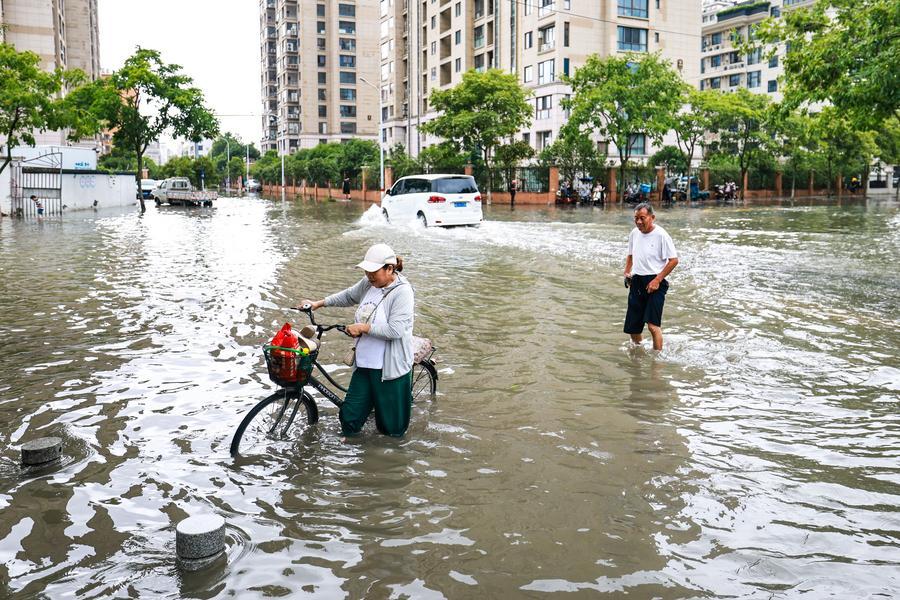
The emergency response currently unfolding across Liaoning and Jilin provinces, driven by the northward progression of Tropical Storm Bavi, highlights the critical necessity of a tiered, high-alert disaster management strategy. With the Shenyang municipal authority issuing a red-level alert—the highest in the four-tier system—the region is effectively bracing for a significant hydro-meteorological event. The forecast of cumulative precipitation ranging from 60 to 160 millimeters within such a tight window creates immediate pressure on urban drainage systems and riverbed capacity. When rainfall intensity exceeds the designed discharge rate of metropolitan infrastructure, the resultant waterlogging is inevitable; managing this requires not just immediate tactical responses like closing metro entrances, but a long-term recalibration of urban planning and drainage coefficients.
The logistics of this response are staggering in scale. The evacuation of 171,412 residents, primarily centered in Fushun, demonstrates the proactive risk mitigation strategies now standard in regional disaster management. By suspending work, schools, and business operations across five prefecture-level cities, authorities are prioritizing human safety over short-term economic output. This represents an essential trade-off in the risk management cycle. From an operational efficiency perspective, the move by China Railway Shenyang Group to adjust schedules and initiate free-of-charge refunds within a 30-day window is a critical service adjustment. It mitigates the logistical chaos that would otherwise occur at high-traffic nodes, allowing the transport network to maintain structural integrity while prioritizing safety over service continuity.
As outlined in recent reporting by People's Daily, the ripple effect of these events is being felt across multiple provinces, including Gansu, where authorities are managing parallel risks of flash floods and geological instability. The data points here—60 to 100 millimeters of predicted rainfall in areas like Lanzhou—underscore the volatility of the current weather pattern. Effective flood control is no longer just about building levees; it is about the integration of real-time monitoring and public communication platforms. The reliance on the 12306 system to manage rail transit data is a prime example of how digital infrastructure provides a stabilizing effect during physical crises.
Moving forward, the focus must remain on the precision of these warning systems. Whether it is a blue, yellow, or red alert, the capability to mobilize resources rapidly—like the gradual restoration of rail services at Jilin station scheduled for later this week—will define the region's recovery speed. This is a perpetual challenge where disaster prevention, structural maintenance, and human security must be perfectly aligned to absorb the shock of climate-driven events. By treating these high-alert situations with standardized, science-based protocols, the region minimizes not only the loss of life but also the long-term cost of post-disaster recovery and infrastructure reconstruction.
News source: https://peoplesdaily.pdnews.cn/china/er/30052643999